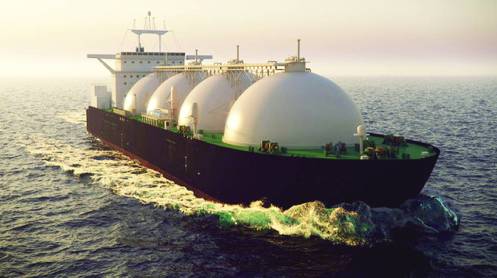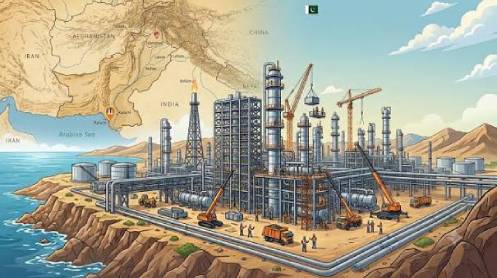
QUETTA: The Balochistan cabinet has approved the development of a $14 billion tri-state gas terminal in Gwadar, backed by investment from Turkmenistan, marking a major step toward strengthening Pakistan’s energy infrastructure and regional connectivity.
The decision was taken during a cabinet meeting chaired by Chief Minister Mir Sarfraz Bugti, who directed the Senior Member of the Board of Revenue to ensure that Balochistan’s legal, financial, and ownership rights are fully safeguarded throughout the project.
Speaking at a post-meeting press conference, Provincial Ministers Mir Zahoor Buledi and Mir Ziaullah Langove said the proposed gas terminal will not only serve as a strategic regional energy hub but will also provide natural gas to the districts of Gwadar, Panjgur, Chagai, and Washuk, improving energy access across southwestern Balochistan.
The cabinet meeting began with prayers for security personnel and civilians who lost their lives in recent terrorist attacks. Reaffirming the government’s commitment to restoring peace, Minister Buledi said the provincial administration would continue decisive action against terrorist networks and would not allow militants to operate on Balochistan’s soil.
Key Development and Welfare Decisions
The cabinet approved a broad range of initiatives aimed at improving public services, governance, education, security, and infrastructure across the province. Major decisions included:
- Approval of scholarships for 300 students under Phase III of the Workers Welfare Board Scholarship Programme, bringing the total number of beneficiaries to 781.
- Release of Rs858 million for security arrangements covering seven development projects under the South Balochistan Package 2021.
- Granting university status to Tameer-i-Nau College.
- Approval of the Balochistan Child Protection Rules 2026 and the establishment of a Child Protection Helpline.
- Amendments to the Balochistan Cadet Colleges Act.
- Renewal of the service agreement for the Quetta Safe City Project.
Infrastructure and Investment
The cabinet also approved the completion of the Sibi-Harnai Road Project, valued at Rs19 billion, under an 80:20 cost-sharing arrangement with the federal government. Under the agreement, the federal government will contribute more than Rs15 billion, while the provincial government will provide over Rs3 billion.
In another significant decision, the government renewed the No Objection Certificate (NOC) for the PARCO Coastal Refinery Project, subject to payment of land charges at prevailing market rates and the commencement of investment within two years.
Additional approvals included:
- Granting ownership rights to residents of Kalanch and New Town, Gwadar.
- Creation of Kandhkot and Manjoti tehsils, along with the establishment of Kandhkot subdivision.
- Upgrading Mezai and Musizai to the status of municipal committees.
Security and Governance Measures
Home Minister Mir Ziaullah Langove announced that damaged Safe City surveillance cameras would be restored within the next 10 days, while investigations into the recent Patel Road blast remain ongoing.
He also clarified that the fuel tankers burned in Chagai had violated official convoy Standard Operating Procedures (SOPs) and were not part of an authorized government convoy.
To strengthen law enforcement, the cabinet formally declared the entire province a police area following the merger of the Levies Force into the provincial police.
The meeting further approved:
- Appointment of SP Nabeel Ahmed as Chief Operating Officer of the Balochistan Safe City Authority.
- Formation of a Provincial Parole Board on the recommendation of the Home Department.
- Establishment of a new police station in Marble City, Hub, to enhance security for industrial and commercial activities.
The approval of the Gwadar gas terminal, alongside key infrastructure and governance initiatives, reflects the provincial government’s broader strategy to attract investment, strengthen energy security, and accelerate socio-economic development across Balochistan.
Story by Saleem Shahid